Tell us about the job
Takes about a minute. No obligation.
A furnace failing in Citrus County is almost certainly failing for reasons a contractor can trace to the unit itself: how old it is, how it was installed, and how consistently it has been serviced. 54 severe weather events were recorded in Citrus County, Florida between 2015 and 2024. At that rate, severe weather is a real but infrequent presence, not the kind of grinding seasonal load that wears components down ahead of schedule. A contractor diagnosing a furnace here will check heat exchangers, ignitors, and blower motors for the ordinary fatigue that accumulates over years of use. That is what the repair bill turns on.
Furnaces in housing built across Citrus County often run on components that are no longer in standard production runs. Half the homes in Citrus County, Florida were built in 1990 or earlier (2020-2024 ACS 5-year). A contractor who opens a unit in stock this old has to determine whether the part that failed is still made, whether a substitute fits the tolerances of that system, and how long sourcing will take. That answer shapes the repair bill more than the labor does.
The Parts of a Furnace a Contractor Checks First
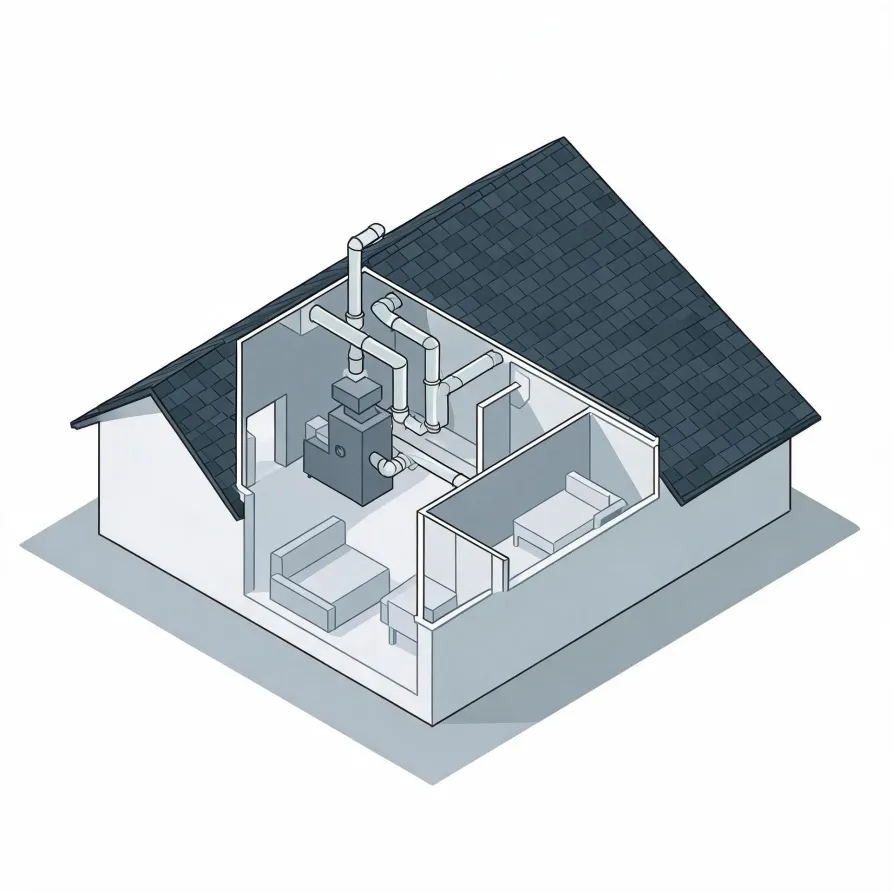
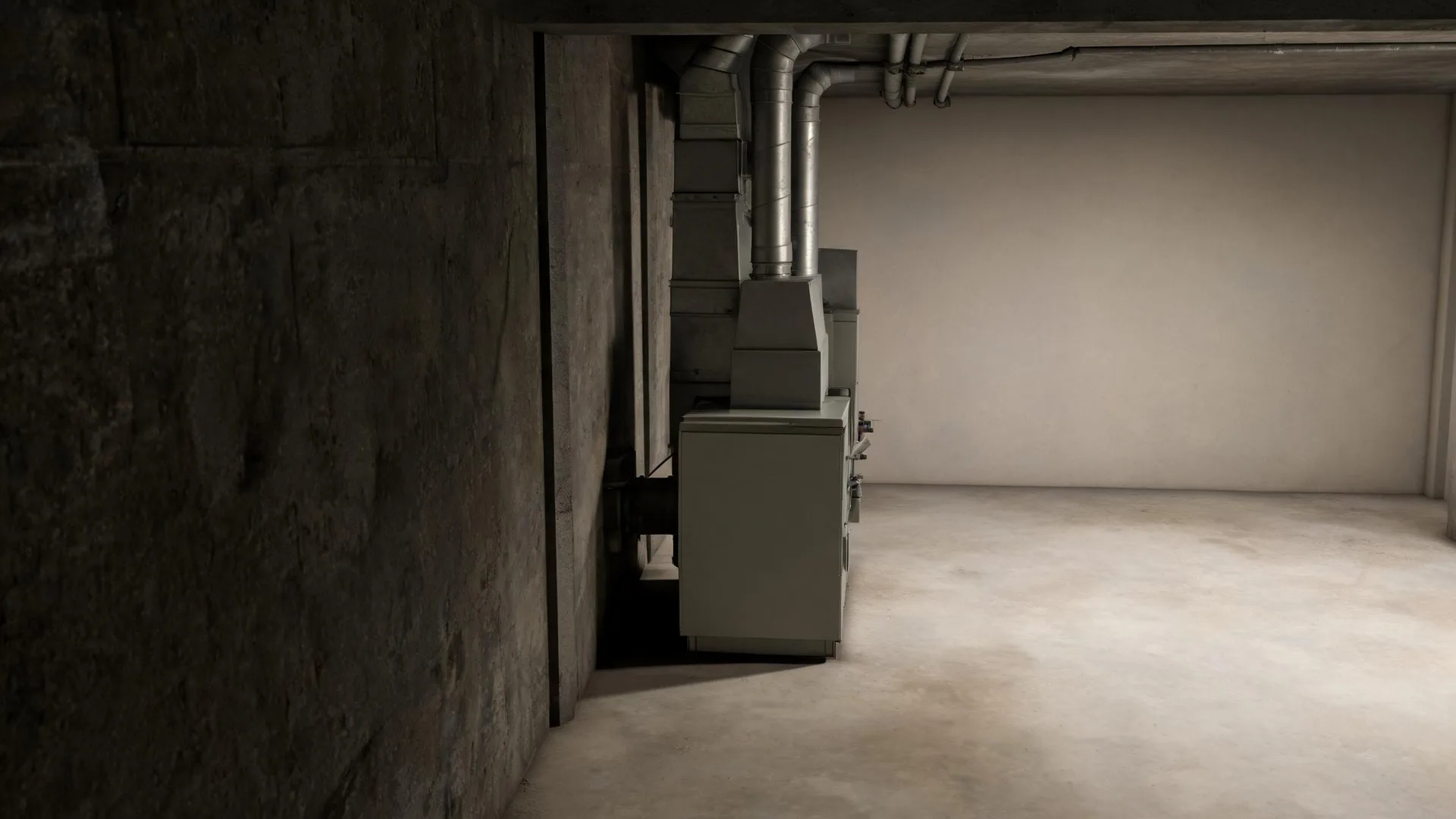
The furnace cabinet sits in a utility space, basement, or closet and is the core of the system. Inside it, the heat exchanger is the piece a contractor looks at closely during repair work. Cracks or corrosion there are a common source of heating failure and, more seriously, of combustion gases reaching the living space.
The burner assembly and the igniter sit at the base of the cabinet and work together to start each heating cycle. The blower motor sits just below the heat exchanger and moves conditioned air into the supply side of the duct system. The control board ties the electrical signals from the thermostat to every moving part inside the cabinet, and a fault there can make the furnace behave as though several components have failed at once.
The drawing shows a general layout of these components, and a licensed contractor determines what applies to the specific equipment and configuration in your home.
Get matched in Citrus CountyCitrus County, by the numbers
54 severe weather events were recorded in Citrus County, Florida between 2015 and 2024.
NOAA National Centers for Environmental Information, Storm Events Database, bulk CSV export, events 2015-01-01 through 2024-12-31.Half the homes in Citrus County, Florida were built in 1990 or earlier (2020-2024 ACS 5-year).
U.S. Census Bureau, 2020-2024 American Community Survey 5-Year EstimatesCitrus County, Florida holds 84,929 housing units (2020-2024 ACS 5-year).
U.S. Census Bureau, 2020-2024 American Community Survey 5-Year EstimatesOwners occupy 85.2% of the occupied homes in Citrus County, Florida (2020-2024 ACS 5-year).
U.S. Census Bureau, 2020-2024 American Community Survey 5-Year EstimatesCodes & Standards Behind Furnace Repair in Citrus County, Florida5 sourced rules and standards
What happens during HVAC repair in Citrus County
Non-weatherized gas furnaces manufactured on or after November 19, 2015 must reach 80.0 percent AFUE.
Non-weatherized oil-fired furnaces manufactured on or after November 19, 2015 must reach 83.0 percent AFUE.
Mobile home gas furnaces manufactured on or after November 19, 2015 must reach 80.0 percent AFUE.
Non-weatherized gas furnaces manufactured on or after December 18, 2028 must reach 95.0 percent AFUE, up from the 80.0 percent minimum that applies to units manufactured before that date.
Licensing Rules for HVAC Repair in Citrus County, Florida
Florida requires a person to be certified or registered in order to engage in the business of contracting in the state.
Severe Weather Events in Citrus County
Extreme weather puts real hours on heating and cooling equipment. Furnace systems in Citrus County face whatever the local climate delivers, and that workload shapes how often repair needs come up.
54 severe weather events, 2015–2024. Source: NOAA National Centers for Environmental Information, Storm Events Database.