Tell us about the job
Takes about a minute. No obligation.
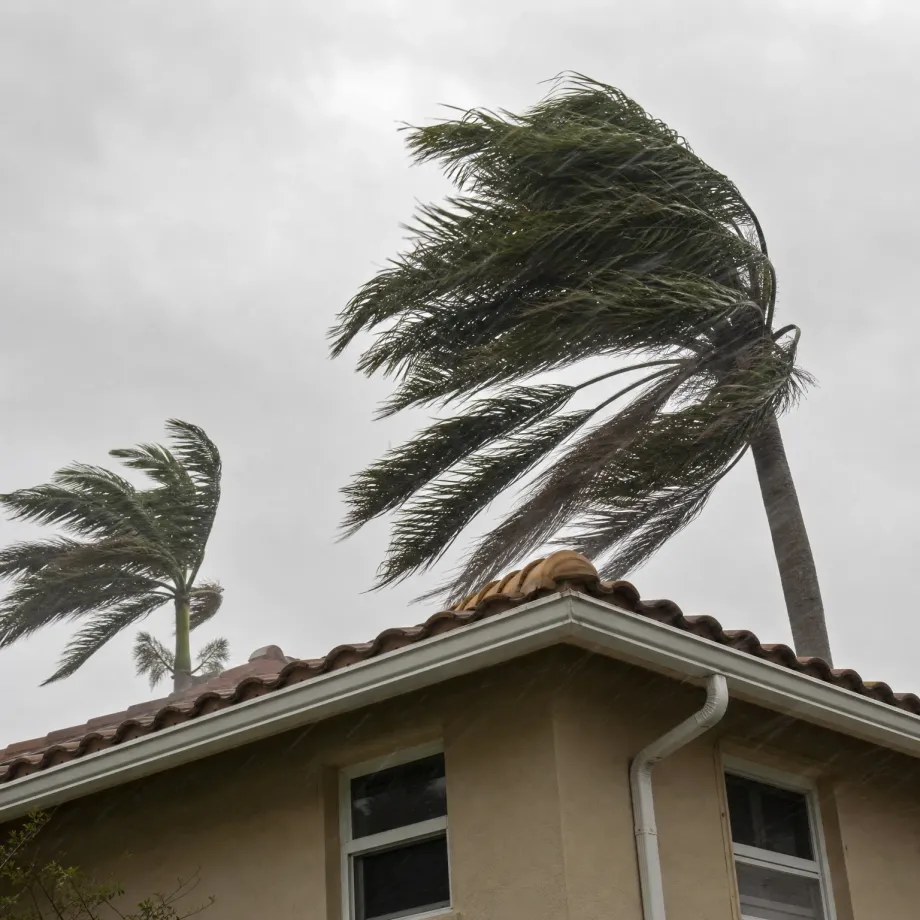
A contractor quoting a furnace installation in Citrus County works out the load from the structure first, because the weather record here does not make that calculation self-evident. 54 severe weather events were recorded in Citrus County, Florida between 2015 and 2024. At that rate, severe weather is a real but infrequent variable, not a condition the equipment fights constantly. A new furnace installed correctly, with sizing matched to the house rather than pulled from a catalog, will carry whatever this area asks of it without being engineered around a threat that arrives only occasionally.
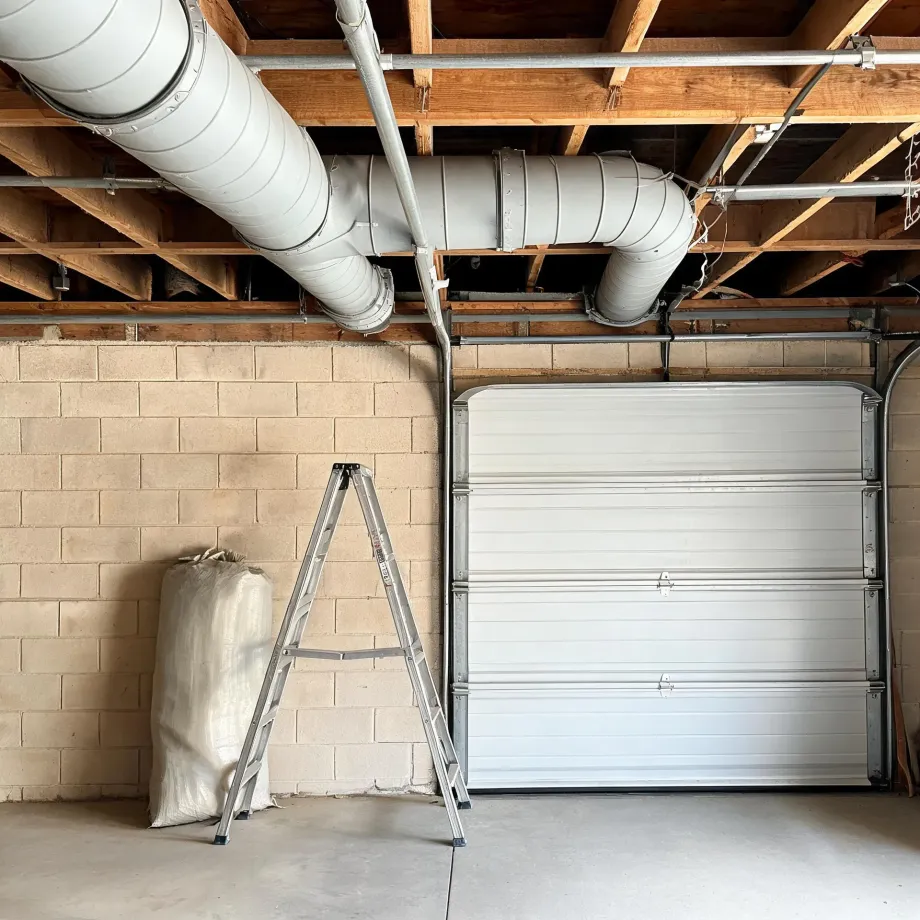
Existing ductwork is what a furnace installation turns on in a county where so much of the housing is this old. Half the homes in Citrus County, Florida were built in 1990 or earlier (2020-2024 ACS 5-year). Ducts sized and routed for older equipment carry a different static pressure than a new furnace demands, and a contractor who skips that assessment will quote the unit and miss the job. The electrical service matters too, but duct geometry is what gets opened, measured, and sometimes rerouted before a new system can run correctly.
What Gets Installed With a New Furnace
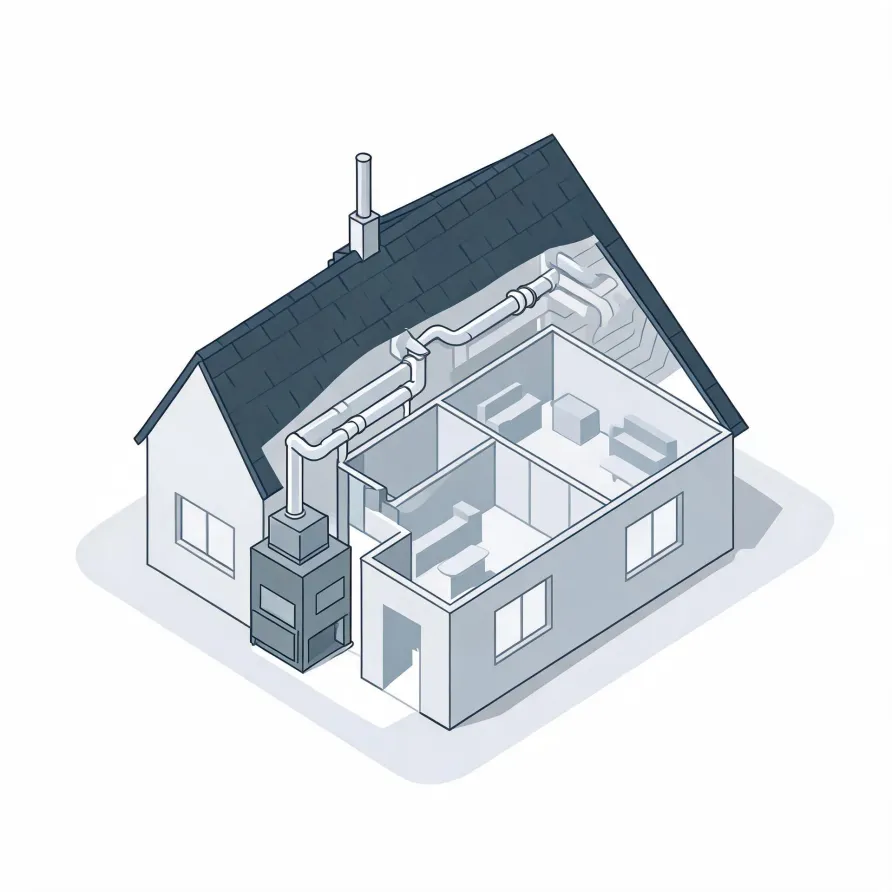
The furnace itself sits in a utility area, basement, or dedicated closet and is the unit that generates heat. A contractor sets the cabinet in place, connects it to the fuel supply, and ties it into the home's existing air handler or blower system. That blower pulls air through the unit and pushes warmed air into the supply side of the duct system.
The flue or venting pipe runs from the furnace to an exterior wall or through the roof, carrying combustion gases out of the house. Alongside it, the contractor fits the thermostat to a wall in the living space, where it reads the air temperature and tells the furnace when to fire and when to shut off.
The drawing shows a typical layout, and a licensed contractor determines what fits the specific configuration of your home.
Get matched in Citrus CountyCitrus County by the Numbers
54 severe weather events were recorded in Citrus County, Florida between 2015 and 2024.
NOAA National Centers for Environmental Information, Storm Events Database, bulk CSV export, events 2015-01-01 through 2024-12-31.Half the homes in Citrus County, Florida were built in 1990 or earlier (2020-2024 ACS 5-year).
U.S. Census Bureau, 2020-2024 American Community Survey 5-Year EstimatesCitrus County, Florida holds 84,929 housing units (2020-2024 ACS 5-year).
U.S. Census Bureau, 2020-2024 American Community Survey 5-Year EstimatesOwners occupy 85.2% of the occupied homes in Citrus County, Florida (2020-2024 ACS 5-year).
U.S. Census Bureau, 2020-2024 American Community Survey 5-Year EstimatesCodes & Standards for Furnace Installation in Citrus County, Florida5 sourced rules and standards
What a Citrus County HVAC installation actually looks like
Non-weatherized gas furnaces manufactured on or after November 19, 2015 must reach 80.0 percent AFUE.
Non-weatherized oil-fired furnaces manufactured on or after November 19, 2015 must reach 83.0 percent AFUE.
Mobile home gas furnaces manufactured on or after November 19, 2015 must reach 80.0 percent AFUE.
Non-weatherized gas furnaces manufactured on or after December 18, 2028 must reach 95.0 percent AFUE, up from the 80.0 percent minimum that applies to units manufactured before that date.
Licensing Rules for HVAC Work in Citrus County, Florida
Florida requires a person to be certified or registered in order to engage in the business of contracting in the state.
Severe Weather Events in Citrus County
Weather puts real load on heating and cooling equipment, and how hard a system works over its life is shaped by what the local climate throws at it. That makes the weather record here a practical backdrop for any conversation about what to install and how to size it.
54 severe weather events, 2015–2024. Source: NOAA National Centers for Environmental Information, Storm Events Database.