Why your furnace whistles in Florida

Step 1 of 3: Equipment

A whistle usually means air trying to squeeze through a space too small for it. Most furnaces here are part of an electric system, and the blower is pulling air through a filter that is dirty or a return vent that is partly closed or undersized for the job. When the opening is too tight, the air speeds up to get through, and that's the sound you hear. It can also come from a gap around the filter slot where air is sneaking past the edges instead of going straight through. None of this means the furnace is failing right away, but a whistle usually gets louder over time, not quieter, because whatever is restricting the airflow tends to get worse, not better. A dirty filter collects more dust. A closed vent stays closed until someone opens it. Left alone, the blower works harder to move the same amount of air, and that strain is what eventually shortens its life.

A gray high-efficiency furnace with white PVC vent pipes and attached ductwork stands beside a concrete support column in a dim, empty basement with bare concrete walls and floor and a small window.

A basement is not something most Florida houses have, so picture instead the closet where the air handler sits, door louvered, this November evening after the sun has dropped and the house has gone quiet enough that you notice the whistle again. It has been there a few days, thin and steady, rising when the system kicks on and dropping away when it cycles off. You crack the closet door and feel for the airflow at the return grille down the hall. It is weak, pulling hard at the edges of the filter. The filter is gray with dust, and the whistle is coming from right there, air forcing its way through what should be open.

A closed laptop and a cream mug of coffee on a coaster sit on a dark wooden table, with a potted plant at left and a kitchen counter, tiled backsplash and shelf of ceramics in the background.

What the sound is actually telling you

Air moves through your return duct and across the blower wheel before it ever reaches the heat strips. When something narrows that path, the air speeds up through the gap, and a narrow gap with fast air moving through it is what makes a whistle. A filter clogged with a season of dust does this. So does a return grille that's too small for the blower pulling behind it, which shows up on systems where the ductwork was sized for a smaller unit than what's running now.

A tech who works on electric furnaces all over this area has seen both and knows which one is more common in which kind of house, and can tell from where the whistle happens, right when the blower kicks on or only once it's been running a while. Figuring that out yourself means pulling the filter, checking the grille, maybe still guessing wrong. Finding someone to look at it means calling around, describing the sound more than once, and weighing quotes against each other. One licensed contractor local to you takes that off your plate and goes straight to the part that's actually narrow.

A gray upholstered sofa with a matching cushion sits beside a potted plant and a wooden table holding a small green plant in a stone pot, near a curtained window.
A woman in a knitted shawl sits in a living room with a fireplace, shelves, a sofa with cushions, and a lamp by a bright window, looking off to the side.
A woman with long brown wavy hair in a green shirt over a white top stands in a living room with built-in white shelves, a ceiling fan, a potted plant and a sliding glass door.
A woman with shoulder-length gray-streaked hair in a light gray knit sweater stands smiling and looking off to the side in a living room with a sofa, houseplant, framed picture, and sunlit sliding glass door.
A woman with shoulder-length curly gray hair wearing a gray knit sweater stands near a window with a sheer curtain, looking to the side, with a blurred interior room behind her.

No phone calls to make

A whistle that keeps coming back isn't something to keep listening to and hoping it stops. Finding out whether it's the filter, the return vent, or something further into the air handler means someone has to actually look at it, and that usually starts with calling around to find a contractor who works on these systems, explaining the sound over the phone, maybe doing that again with a second company to see who can come sooner or quote fairer. That's the part this page skips. A local contractor who services electric furnace systems all over Florida has heard this whistle before, in a closet just like yours, and knows what narrows that return path first. Your request goes to one of them, not a handful, so you're not fielding five calls about the same noise. You deal with the whistle once, with someone who already knows what it usually is.

A clogged filter doesn't just block air, it forces the blower motor to work harder to pull the same amount through, and that strain can show up in your power bill before it shows up as a breakdown.

Swap the filter and a whistle that's been there for weeks can disappear in minutes, but one that stays after a fresh filter is telling you the problem sits further back in the system.

Winter nights average 52°F statewide

52°F is a mild night by most standards, which is exactly why the system doesn't run long or hard enough here to blow a weak whistle into a problem you'd notice sooner. The heat strips click on, warm the air a little, and shut off again. A narrow gap stays quiet most of the time and only whistles on the colder nights, so the sound can come and go for weeks before you're sure it's real.

NOAA nClimDiv 1991-2020 county normals weighted by homes

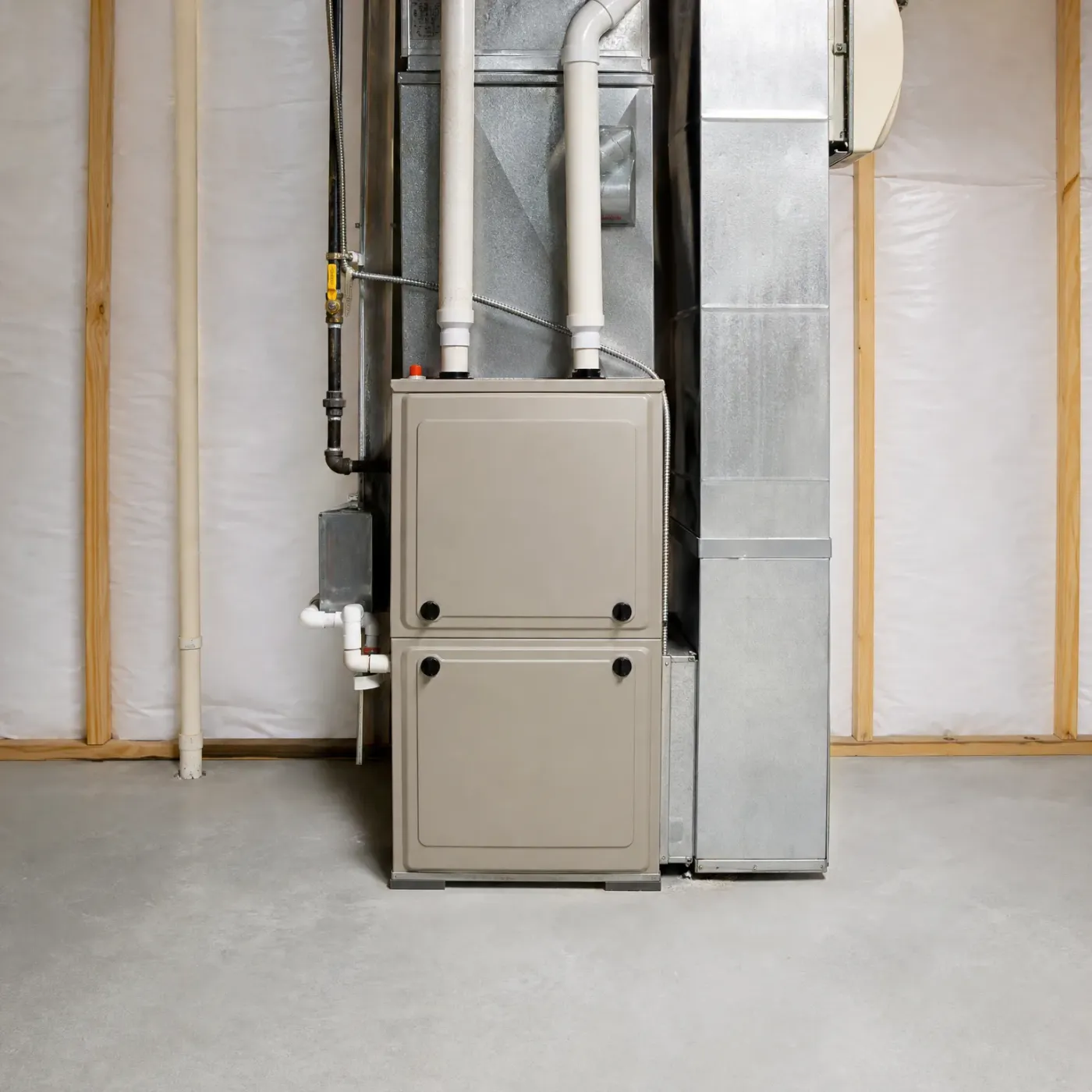
A beige high-efficiency furnace stands on a concrete basement floor beside sheet-metal ductwork, with white PVC vent pipes and a gas line running along an insulated wood-framed wall.

Quiet airflow, nothing in the way

Air moves from the return grille through a clean filter, across the blower wheel, and out through the ducts without a fight. Nothing narrows the path, so nothing speeds up enough to sing. The system just runs and shuts off.

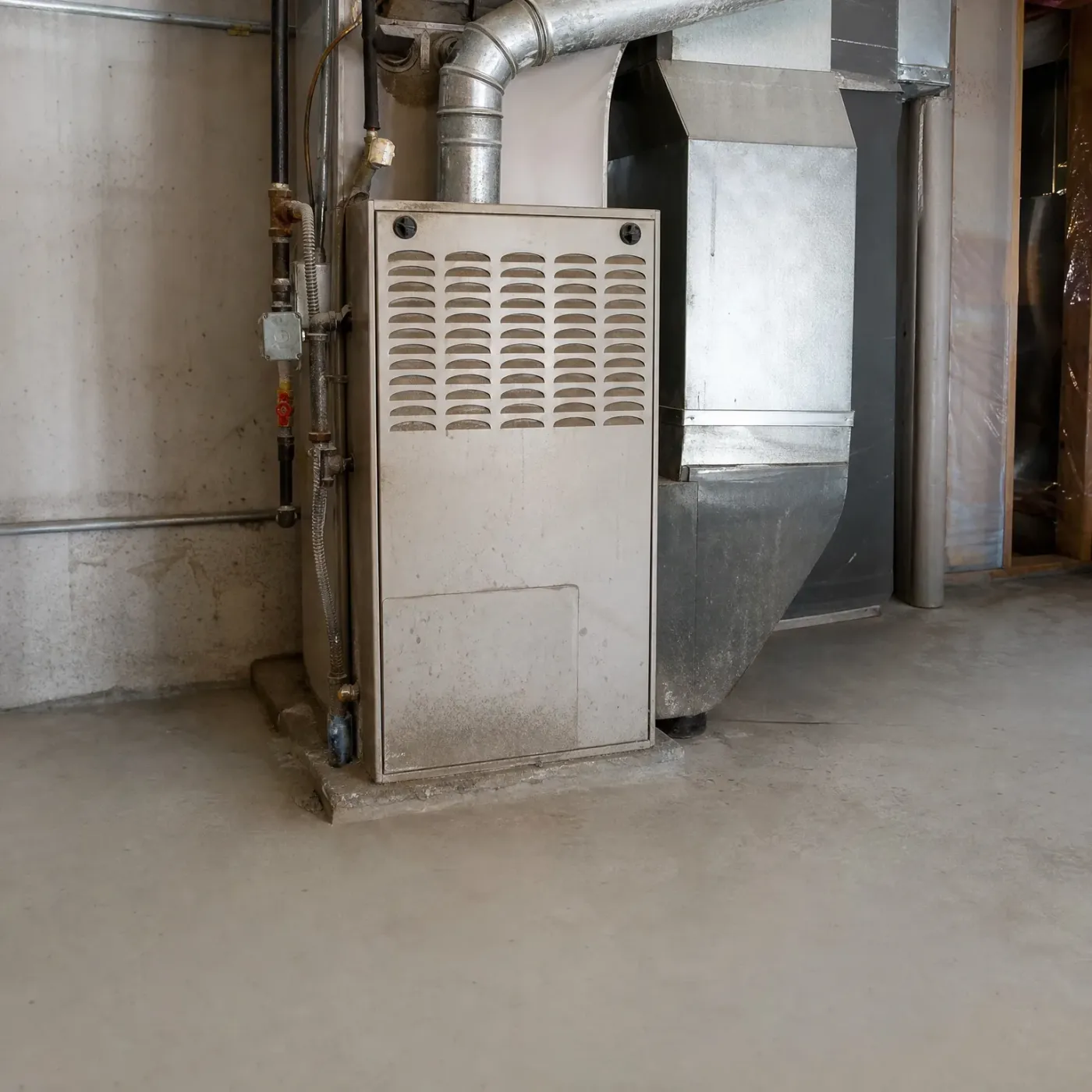
An older metal furnace with a louvered front panel stands against a concrete basement wall, connected to sheet-metal ductwork and a flue pipe, with copper and steel pipes running alongside.

A gap forced into the sound

Dust built up on the filter, a vent half shut, or a seam come loose all do the same thing: they shrink the space air has to pass through. The whistle is that air being forced through a smaller opening than it needs.

A woman with her hair in a bun holds a sleeping young child against her chest, both wrapped in a textured beige knit blanket on a sofa in a dimly lit room with a lamp, framed picture, and bookshelf behind them.
A smiling older woman with gray hair in a cream knit sweater stands in a dimly lit kitchen beside a window showing snow outside, with a round loaf of bread on the counter in the foreground.

What to do about the whistle

  • A whistle almost always comes down to a filter, a return vent, or a gap near the air handler, and each one is simple to check once someone's looking at the actual system.
  • A technician who works on electric heat strip systems all winter in Florida homes knows which of those three spots to check first.
  • You're matched with one licensed contractor local to your area, not a list of companies competing for the callback.
  • That's one person to talk to about the whistle instead of fielding several calls and comparing quotes yourself.
  • Left alone, a whistle doesn't fix itself, since the gap causing it stays the same size whether or not you're listening to it.
  • Someone who services this equipment regularly can tell you in minutes whether it's the filter or something past it worth a closer look.

The sound points to one of three places: the filter, the return vent, or a gap somewhere near the air handler itself. None of those are mysterious once someone is standing in front of the system, but they're hard to tell apart from the next room just by listening. A filter you swap yourself might solve it. If it doesn't, the next step is someone who knows electric heat strip systems, since that's what's running behind most furnaces in Florida homes, and who has heard this exact whistle before in houses like yours.

That's the advantage of having one licensed contractor local to your area look at it, rather than working the phones yourself. You're not collecting quotes from three companies or explaining the same thing over and over to whoever picks up. It's one person, already familiar with how these systems act in houses nearby, checking the filter first, then the return vent, then the rest of the air handler if it comes to that.

The whistle itself won't go away on its own. The gap causing it, whatever size it is, stays that size whether the blower is running or not, whether you're home to hear it or not. Some nights it'll be quieter just because the system isn't working hard. But the fix is the same either way: someone has to look at what's actually narrowing that airflow, and that's a short visit, not a guessing game.

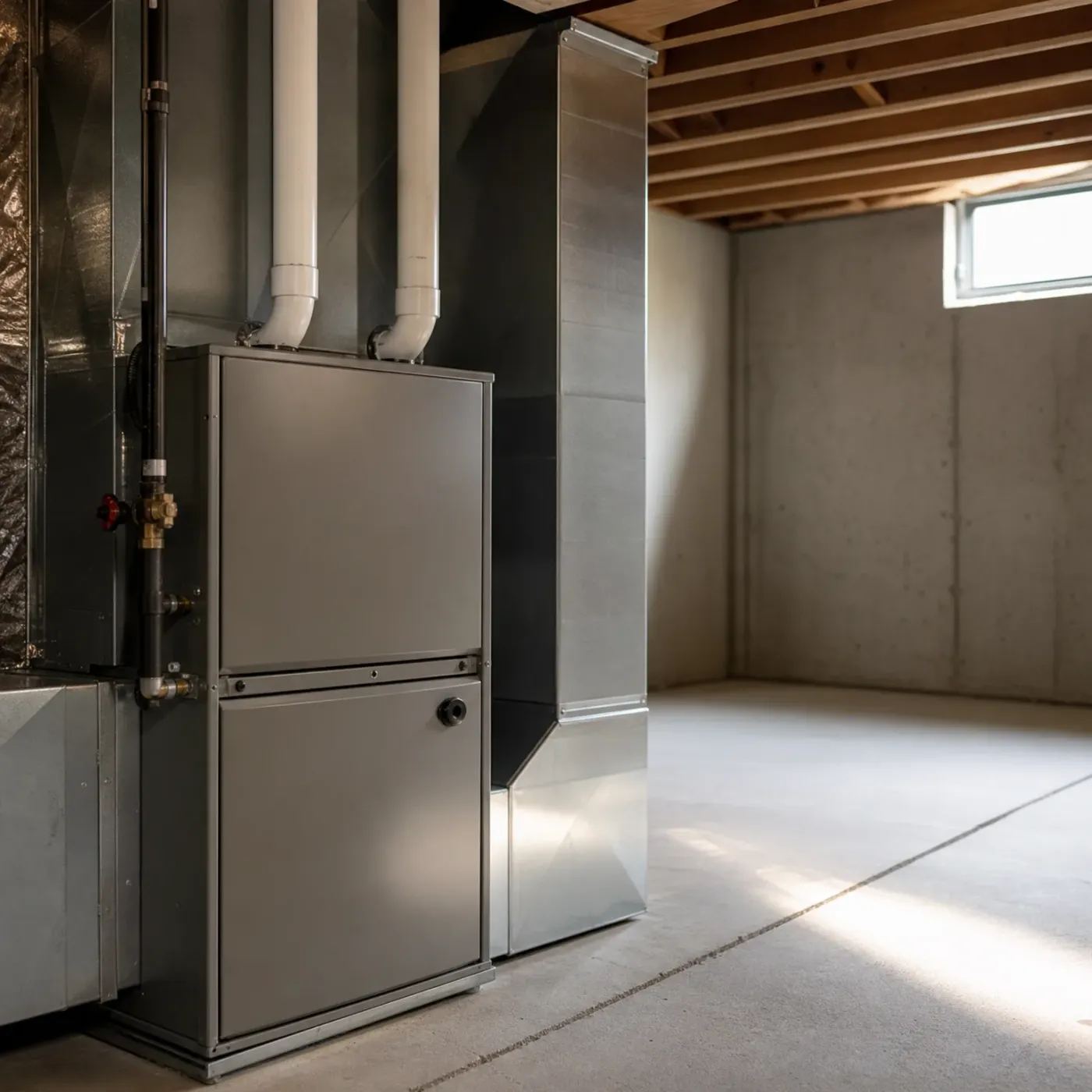
A gray furnace with PVC vent pipes and sheet-metal ductwork stands against a wall in an unfinished basement with concrete floor and walls, exposed wood joists, and a small window.

One form, no calling around

Reach a local pro

Your request stays with one local pro.

You're not committing to anything by asking.